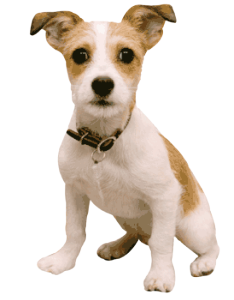
Most people just want to be able to walk their dog without being pulled down the street, or have their dog greet people nicely without jumping, or just have their dog listen to them.

Our training philosophy is a very simple one. It's based on the fact that dogs will react to positive, rewarding, pleasurable situations. That's why we use positive reinforcement techniques, games and field trips. I'm sure you agree, it's easier and more fun to do things because you want to, not because you're afraid not to. We specialize in helping you learn to read your dog's body language and how to better communicate with them because training should be fun, not intimidating. After all, it's not rocket science, it's just dog training.

We train indoors and outdoors, on field trips, and when the weather permits at the pool!


Training Tip: Greeting a Strange Dog

How to greet a strange dog…Any strange dog

There has recently been publicity about 2 dog related incidents; one was McDonald's pulling an ad that said petting a stray pit bull was risky, and another was a news anchor getting bitten by a dog on the air.

Unfortunately, it was a power breed that bit the anchor woman. However, it could have just as easily been a Chihuahua, a Labrador or a mutt. She interacted with this dog by trying to keep his head cupped in her hands and leaning into him, and eventually putting her face in his face "to get a kiss". This dog had never been in a TV studio, was throwing body language trying to let her know how uncomfortable he was, but his signals were ignored by all the humans there. Though she meant no harm, from the dog's point of view it obviously felt threatening.

There is a long standing belief that as long as you put your open hand (and some think a closed fist) out so a dog can smell you, you have been properly introduced. What if the dog is head-shy? What if you put your hand out too quickly and directly at the dog's face? Have you ever seen dogs greet each other like that? (we'll skip the butt-sniff jokes for now)

So how do you greet a dog? It's easy… You don't. You let the dog greet you. Stand slightly sidewise to the dog, don't look at him straight in the eyes, stay upright, and let him come to you. When he does don't take that as an invitation to lean over him and start petting. Let him/her smell you and get used to you. If this is a friendly dog and the owner says it's ok, you can open your hand next to you, not thrusting it toward the dog, and when the dog puts his muzzle in your hand lightly touch him on the side of the head or under the chin. Keep it short and sweet-count to 2-and then resume ignoring him. This makes sense to a dog. Coming straight at a dog, speaking in a high-pitched voice, looming over him, reaching over his head to pat him, grabbing him around the neck are all signals of possible aggression in the dog world, and if this is a shy dog he may perceive you that way. If you see the dog stretching out to smell you looking like he's ready to beat a hasty retreat, just stand there and ignore him the whole time.

What if he smells you and then backs up and barks at you? Completely ignore him. Turn your head to the side and up, or turn your back to him. Wait for him to calm down and then just walk away. This helps a shy dog learn that barking won't make you go away but calming down will. Don't try to "win him over" because you can amp up his stress level.

Remember, there is no law that says all dogs need or want to be touched by a stranger.


Training Tip:  Are you prasing fear?

We’re humans. We need to sooth those of us who are in need, distressed, or troubled. We do that by talking in a low, soothing voice, and we say things like, “It’s ok. It’s just a storm. It can’t hurt you”, or “Oh sweety. You don’t have to be afraid of that doggy. He’s a nice doggy”. Now show of hands, how many of you have done the same thing with your dog? Come on. Raise your hand.

Though we have the best of intentions what we are actually doing by ‘soothing’ our dogs is reinforcing their fear. Since dogs cannot speak English all they absorb is that nice, praising voice so that must mean that you approve and desire that fearful behavior. Think about it. While you’re talking to them, in your nicest voice, explaining why your dog doesn’t need to be afraid, they’re hearing, “Good dog. Be afraid. Fear makes me happy” because that’s the tone you use when you’re pleased with them.


So the next time your dog shows fear just ignore it. Set a good example by not reacting to the thing that is making them afraid. Be calm and patient and let your dog decide if he/she wants anything to do with that scary thing. Let them start from a great distance if necessary and approach that scary monster under their own steam. It may take a few minutes or it may take dozens of exposures, but if you are patient and calm and your dog conquers that fear they will trust you so much more. When your dog starts to show a little bravery by leaning towards the scary thing that’s when you should calmly and quietly say, “Good dog”.

Remember to praise what you want and ignore what you don’t want.